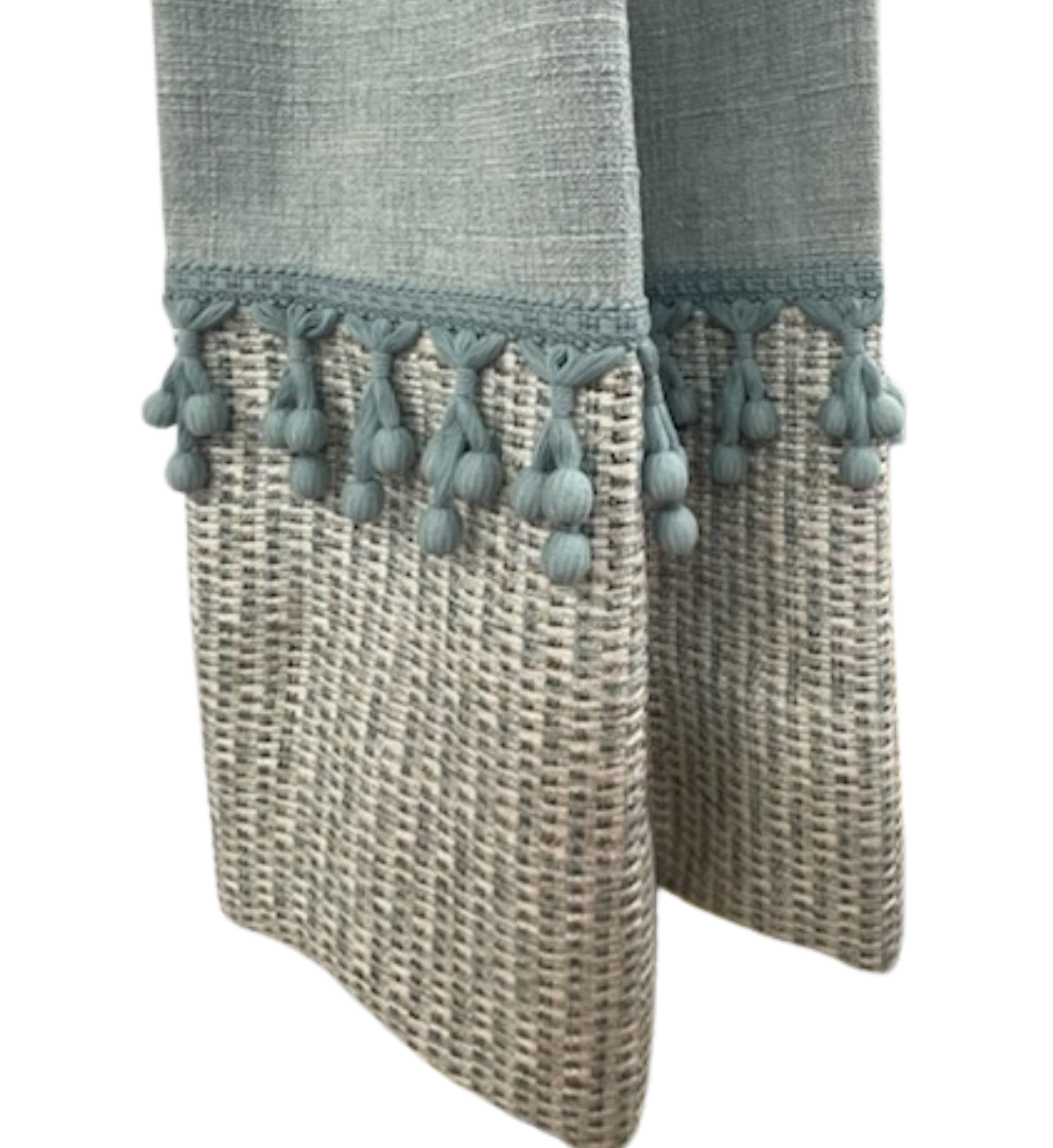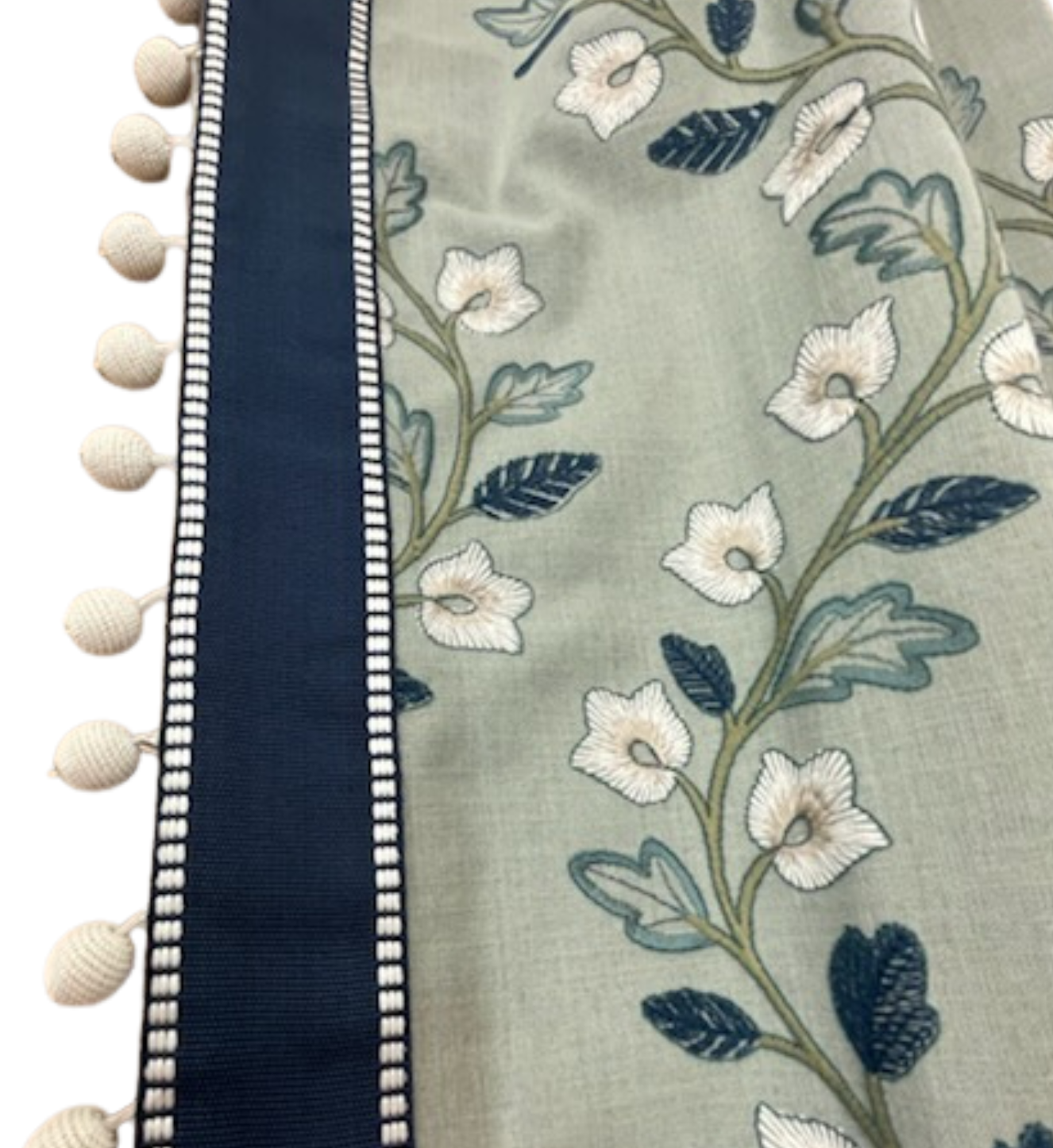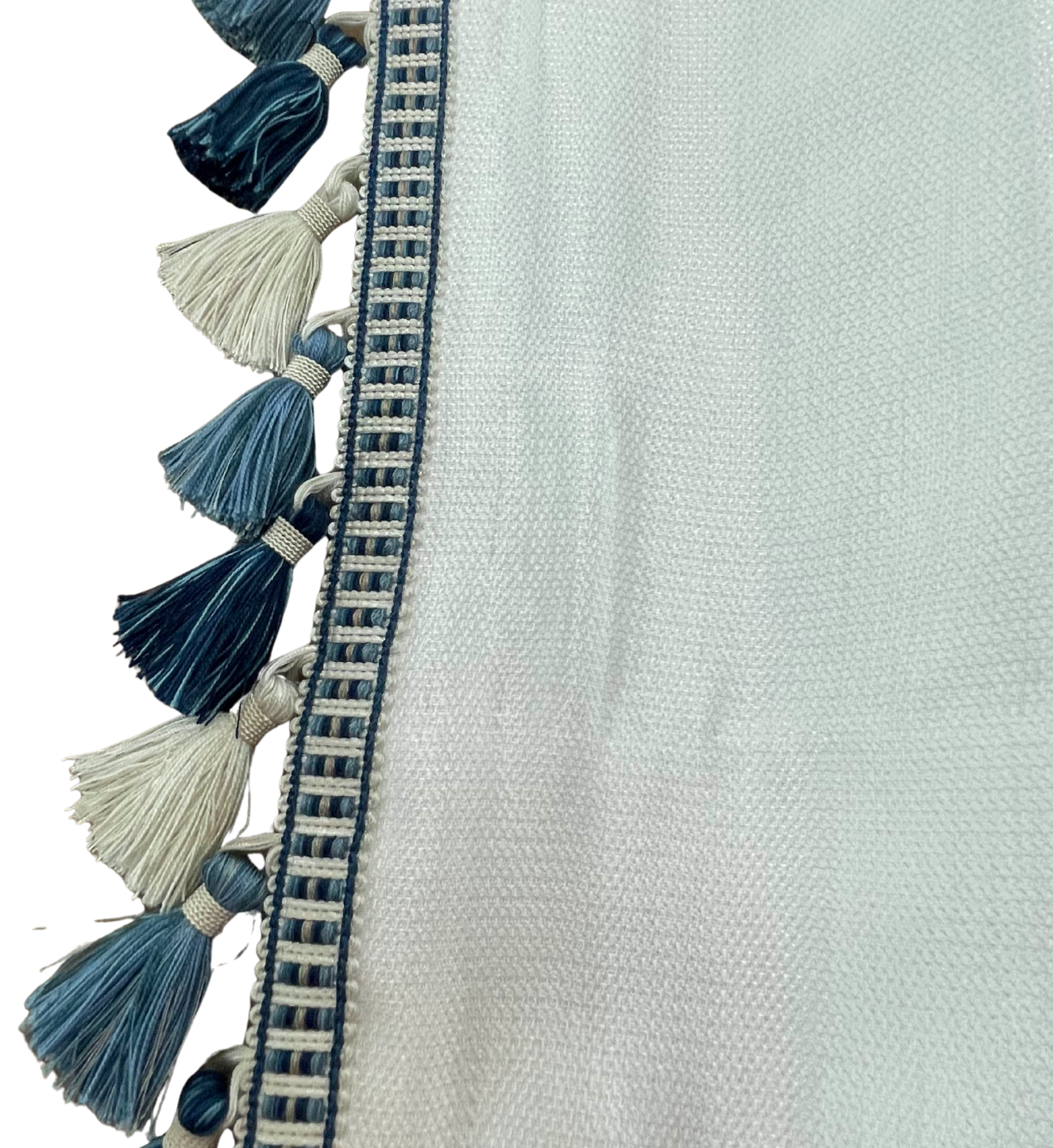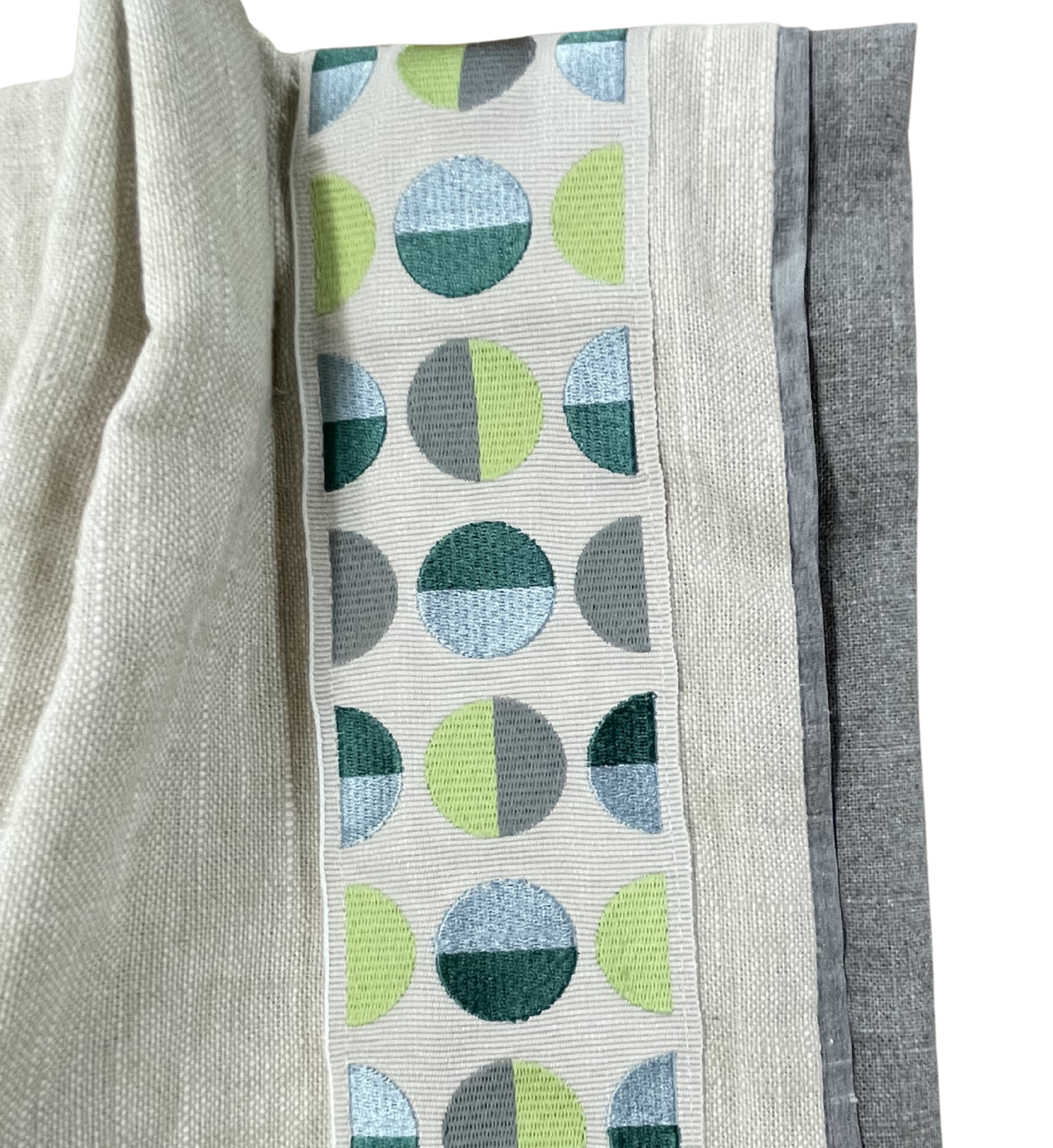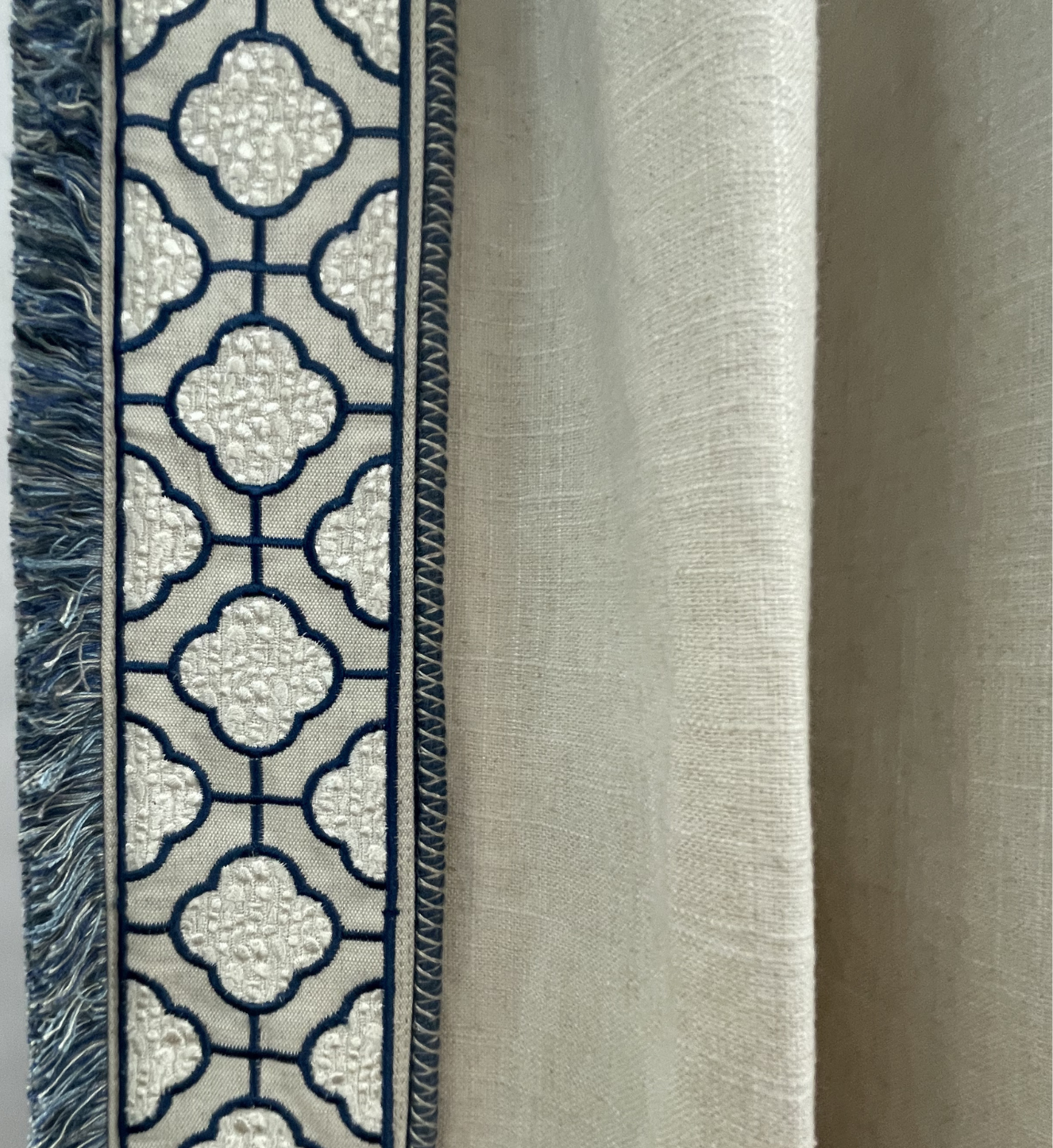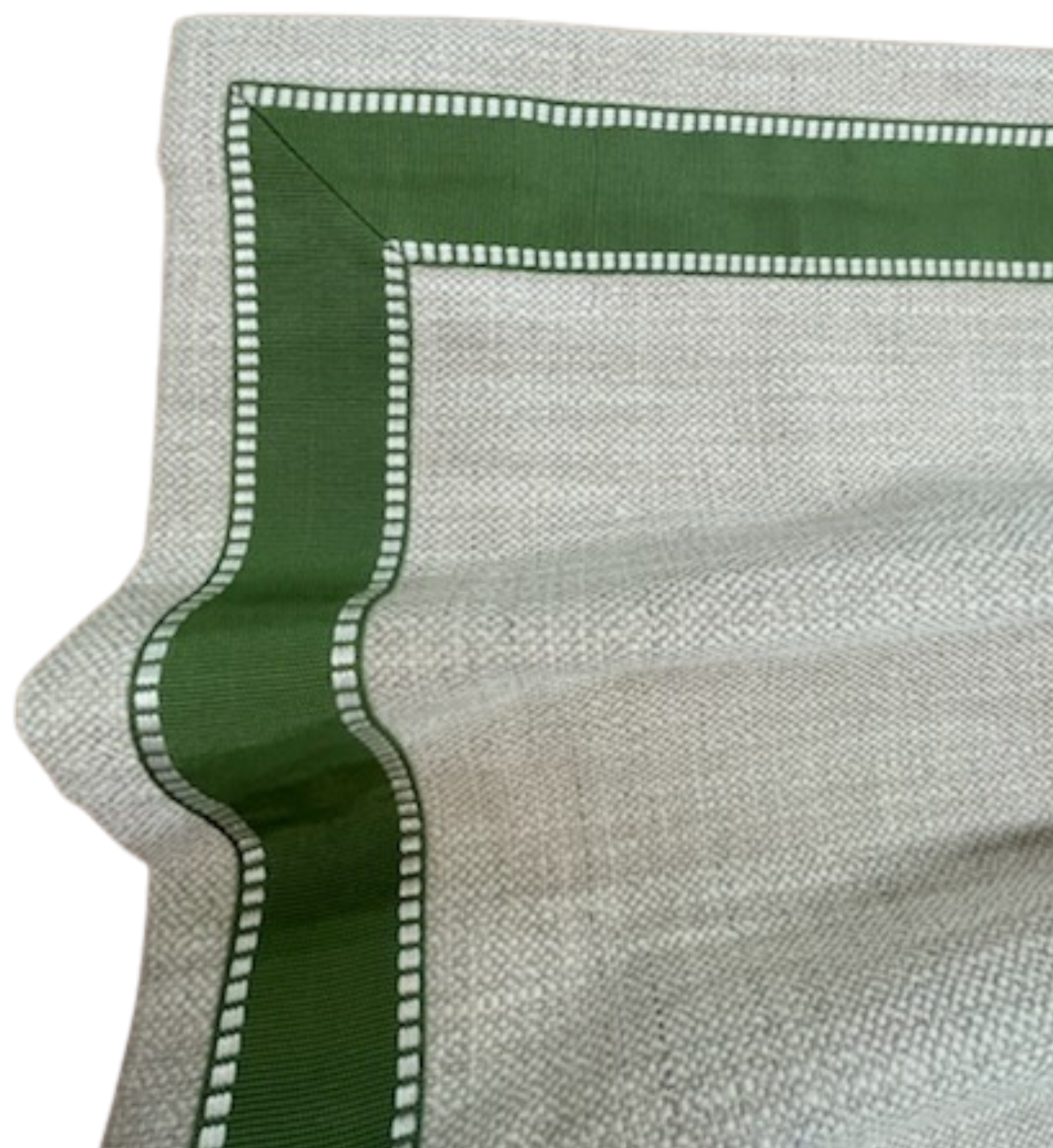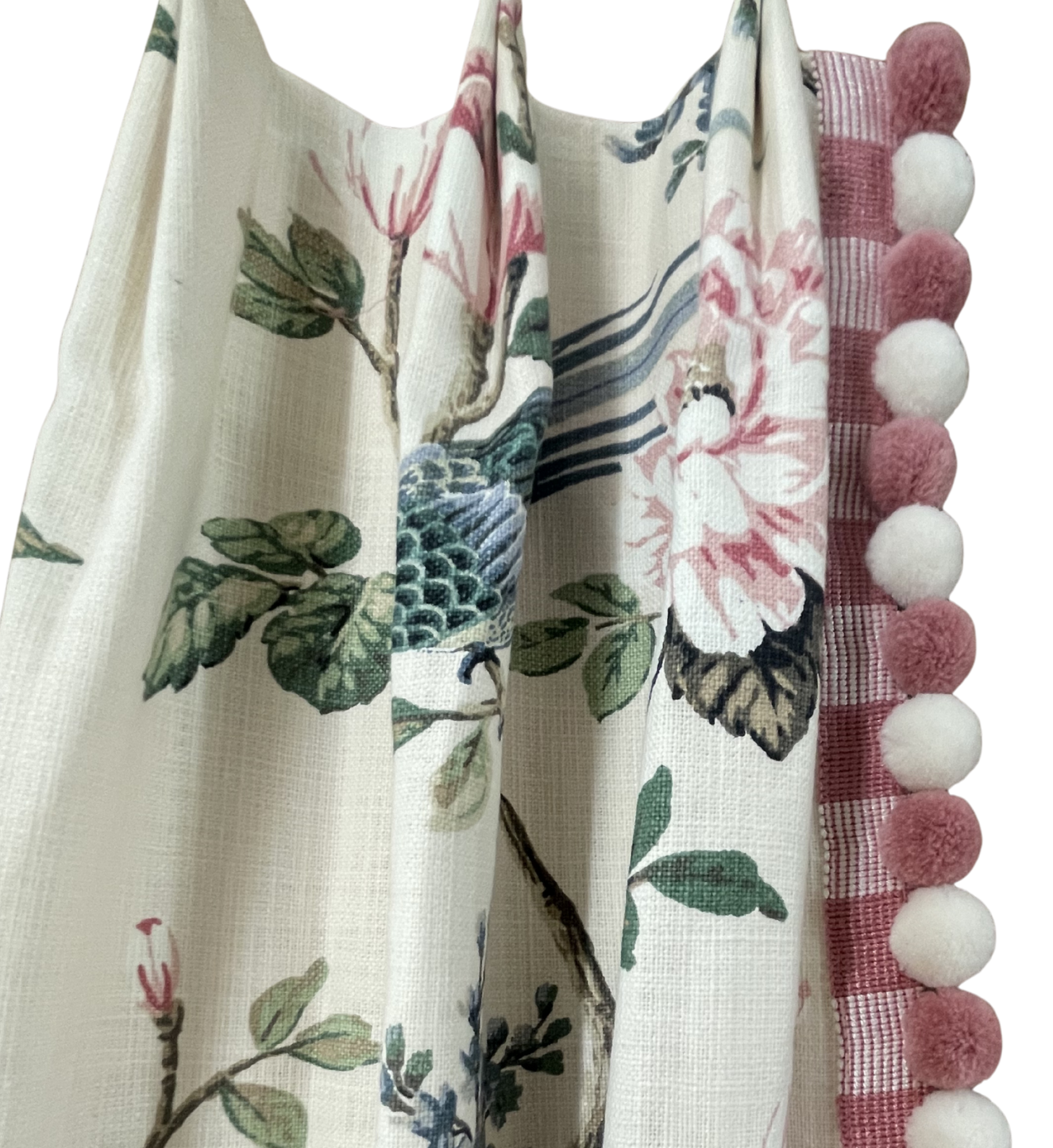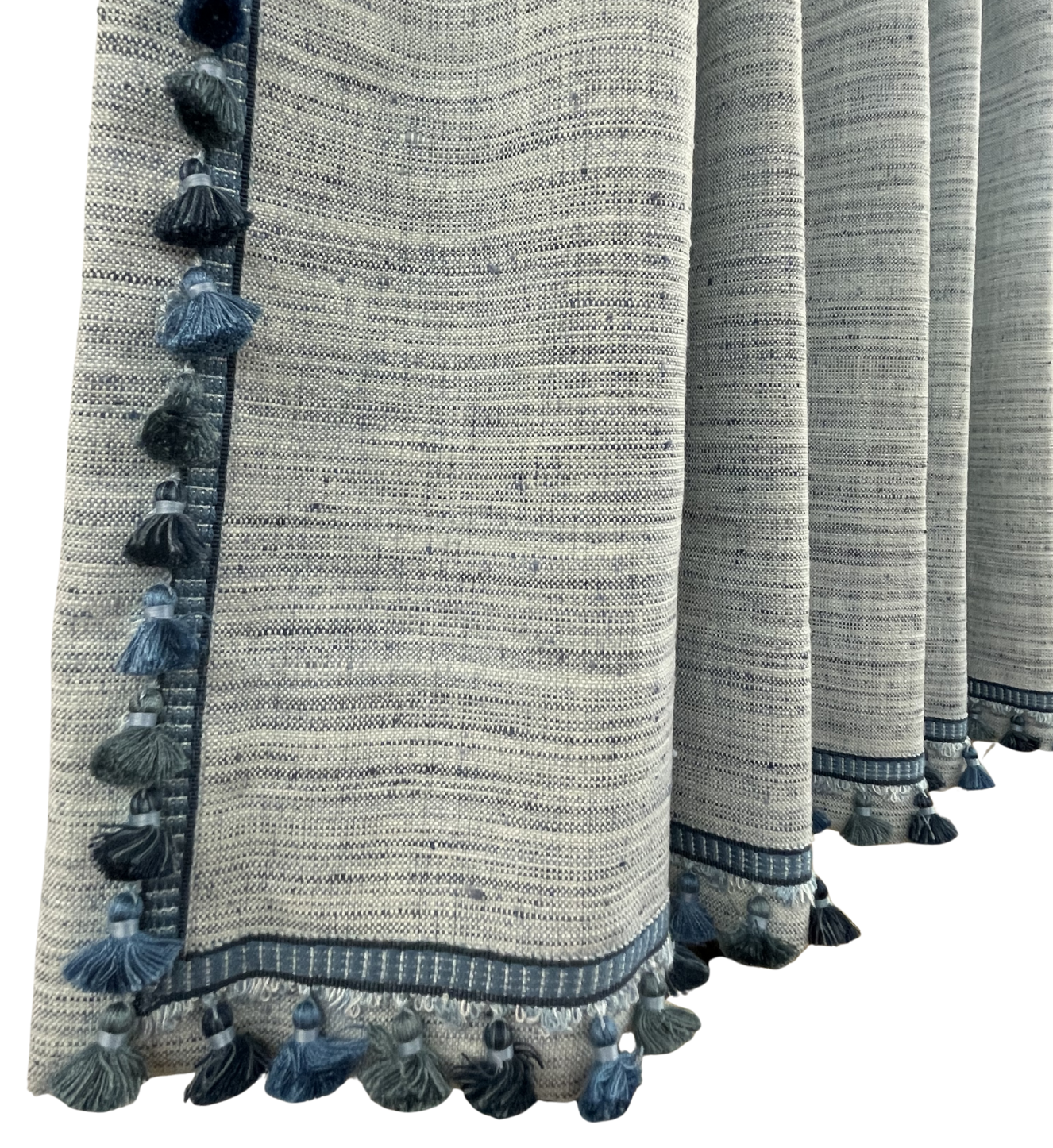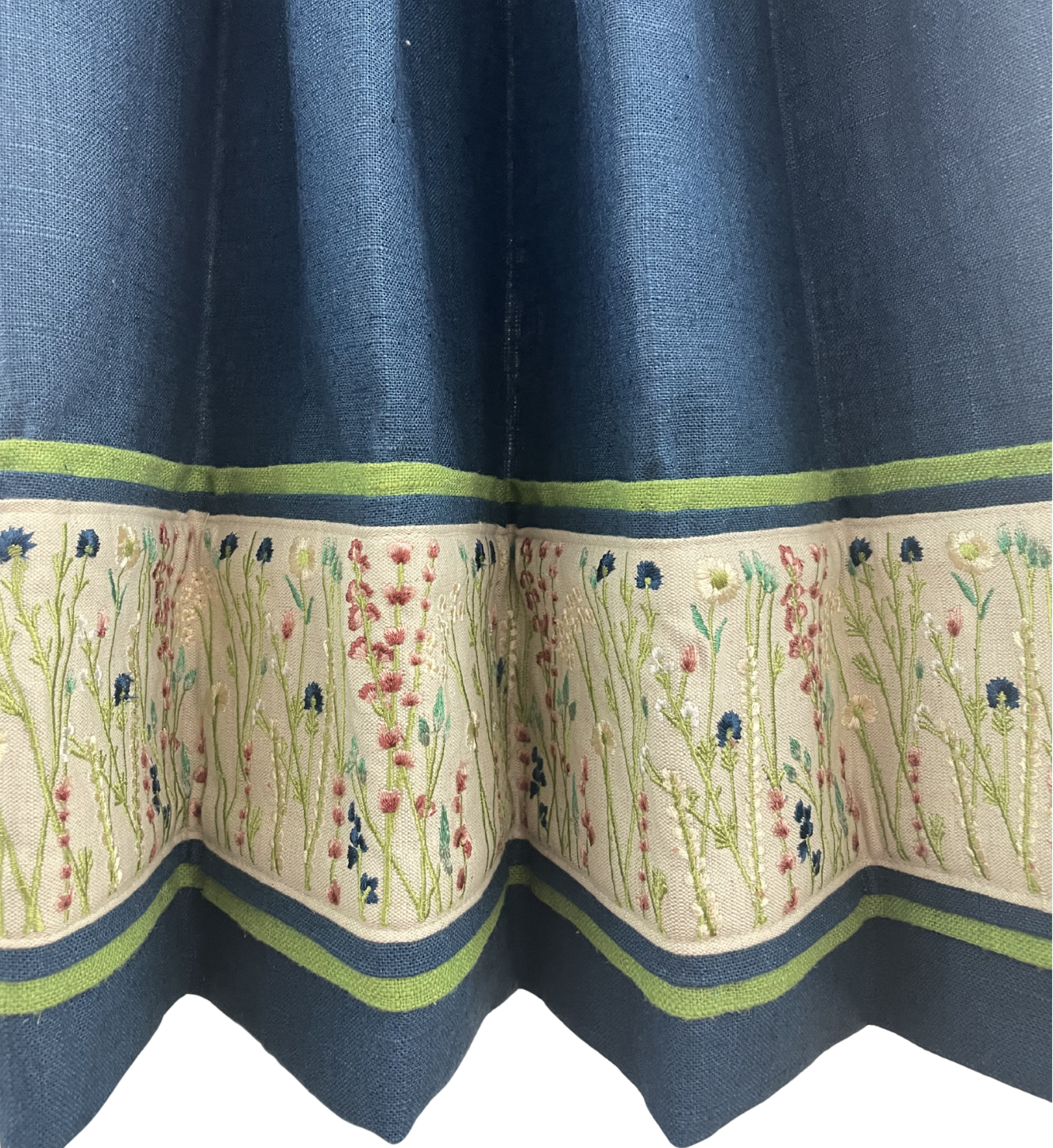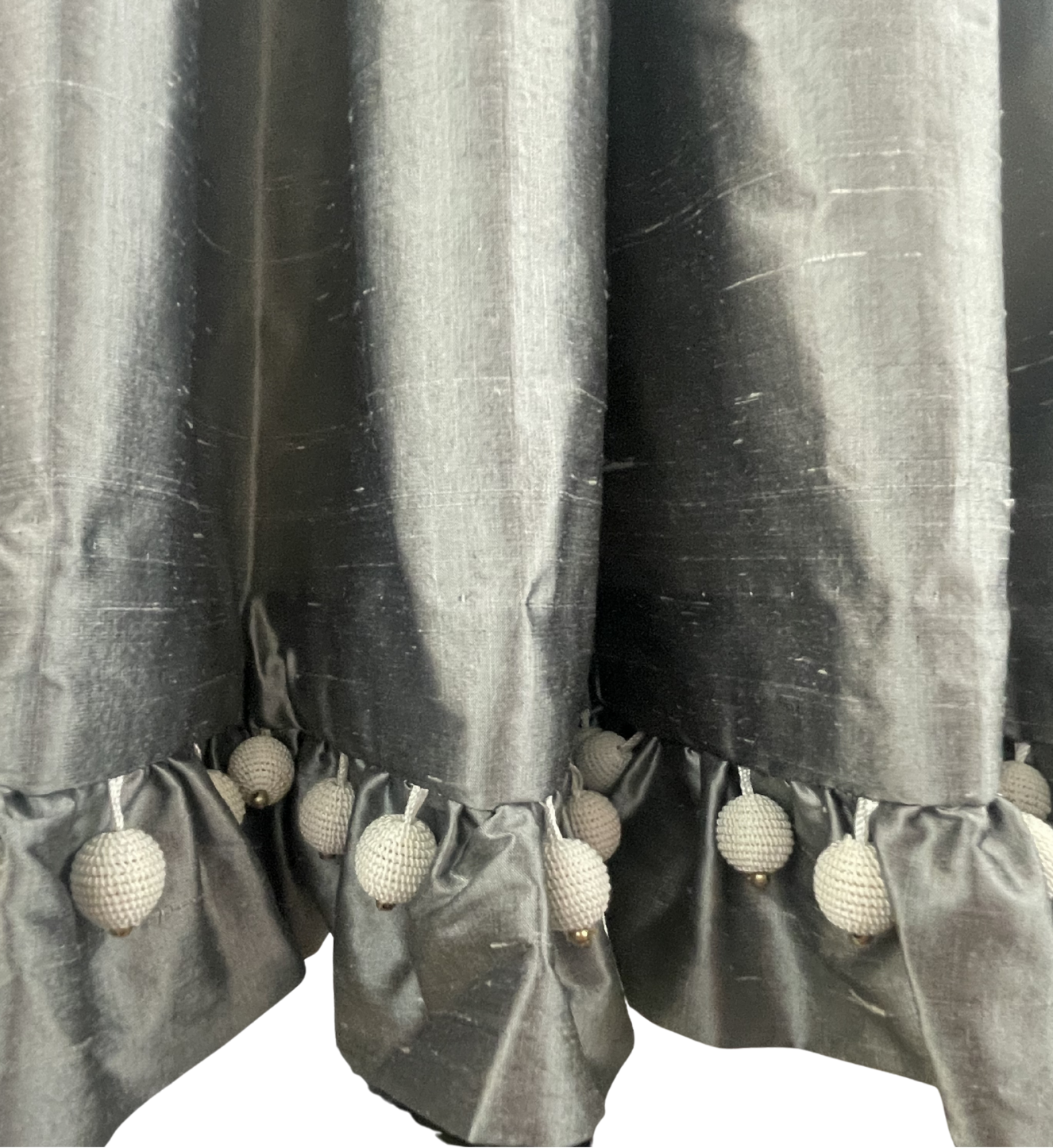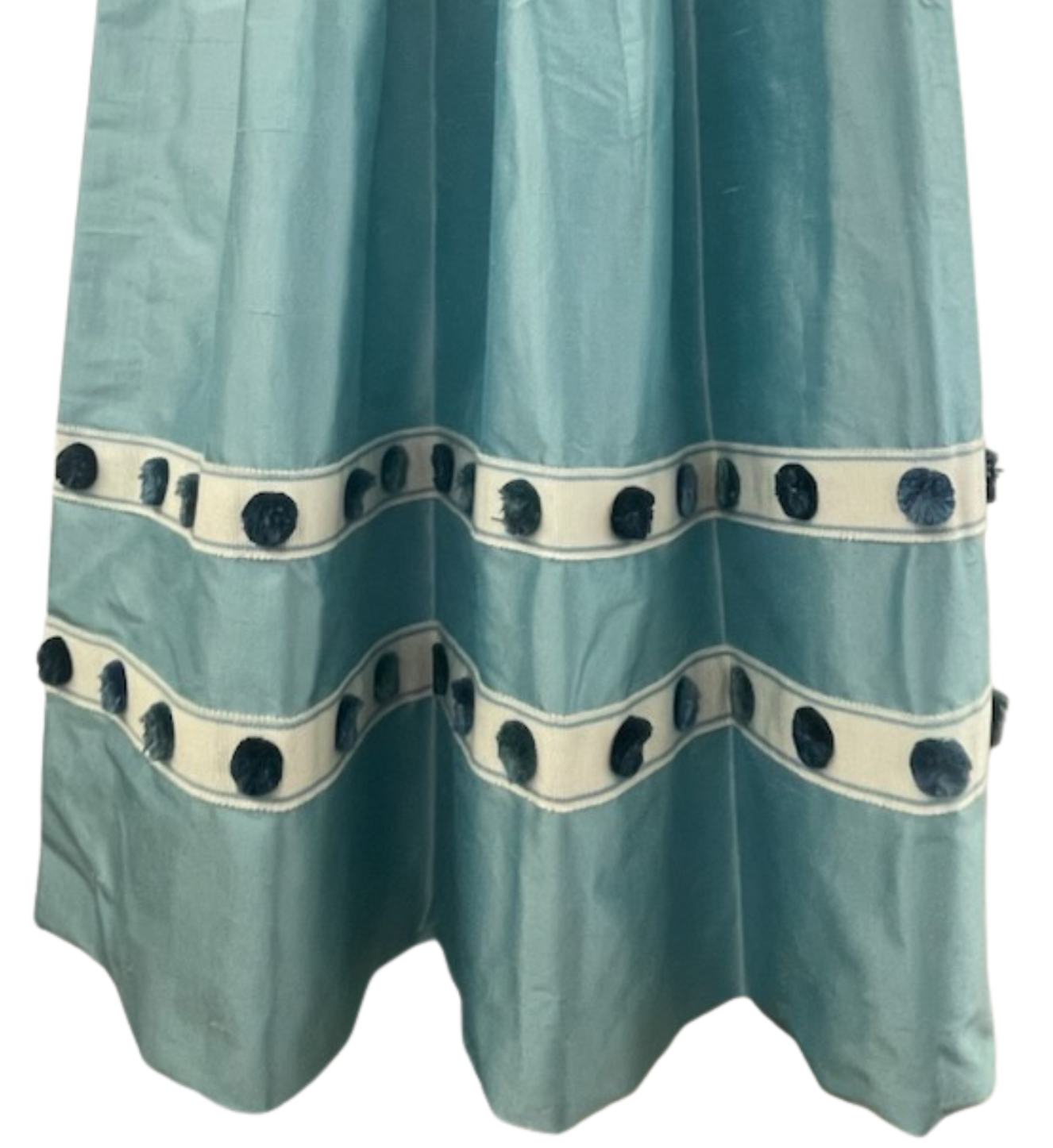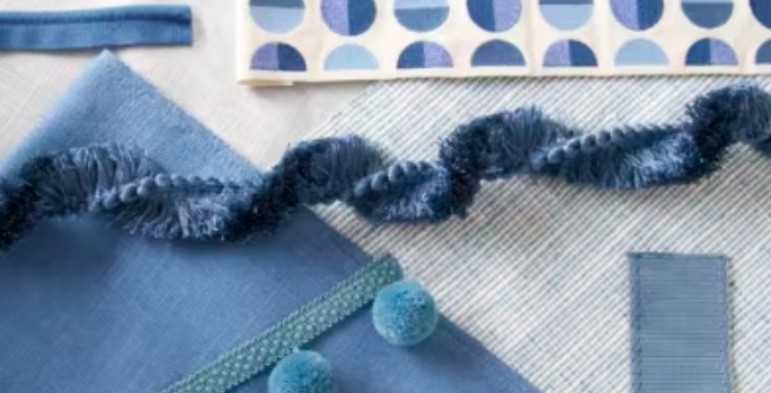
Designers know that the right trim can transform a window treatment from ordinary to exceptional. Trim is one of the most effective ways to elevate a design, adding texture, color, and dimension that draw the eye and define the style of a room.
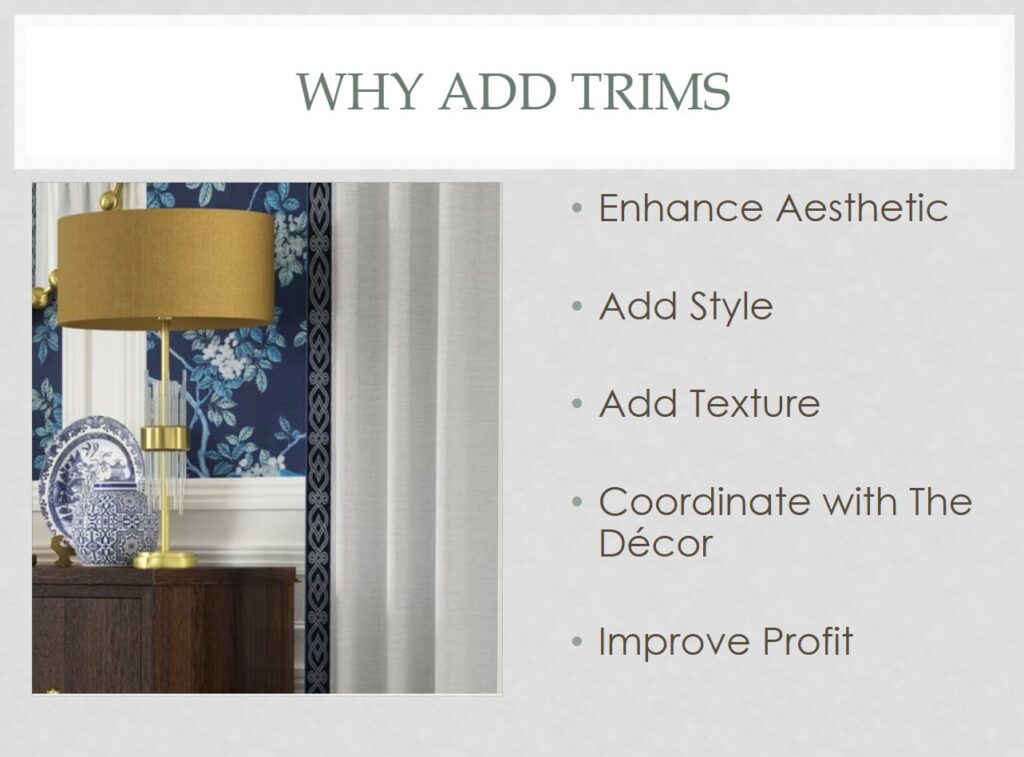
Whether it’s a refined tape detail along the lead edge or a playful tassel accent, trims provide an opportunity to customize and coordinate with the overall décor. They not only enhance aesthetics, but also add value, turning standard panels into distinctive, high-end pieces that reflect craftsmanship and attention to detail.
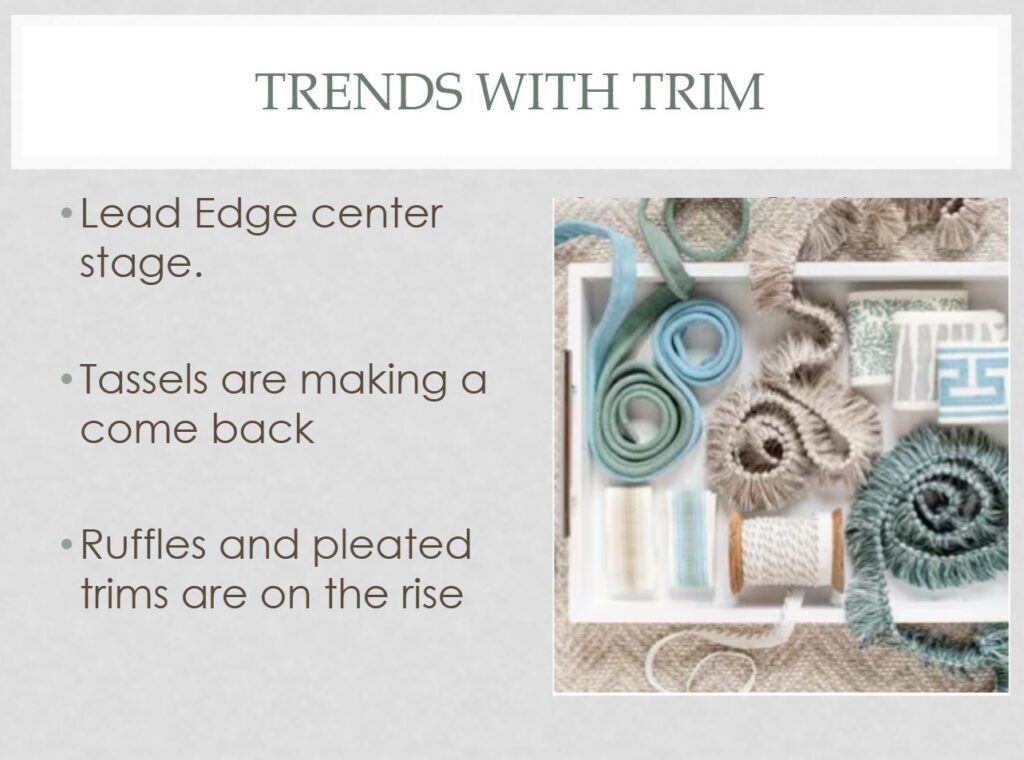
Today’s trim styles are embracing both modern and traditional elements.
In this behind-the-scenes demonstration, Jennifer DeRosa, MYL Drapery Department Manager, showcases professional trim application methods used in workrooms. She demonstrates how to attach trims, such as pom-poms, tassels, piping, and fringe, using precision techniques that ensure a flawless finish.
You’ll see how different adhesives, from iron-on transfer tape to continuous-press adhesive, work together with stitching and careful fabric handling to keep edges clean and prevent shifting. Jennifer also shares practical workarounds for bulky fabrics, layered designs, and complex trims, giving designers valuable insight into professional methods that save time, protect fabric integrity, and elevate the final look.
Trim Application Methods
There are several ways to attach trim, each with its own advantages:
- Transfer Tape: An iron-on, no-sew method that creates a permanent hold ideal for side or bottom hems, creating a clean finish without visible stitches.
- Jewel’s Tape: A double-sided adhesive that’s removable and repositionable. Perfect for precise placement, it strengthens over time without needing heat.
- Duofix and Other Adhesives: Continuous-press adhesives are used less often and generally only at a client’s request due to the need for consistent application and care with delicate fabrics.
- Double-Sided Tape with Straight Stitching: The go-to method for most trims. The tape holds the trim in place, while stitching ensures long-term durability. This approach allows for corrections and adjustments without damaging the fabric.
Trim Styles and Techniques
Designers frequently face challenges with trimming different materials, especially when working with elaborate or layered designs.
- Lead Edge Importance: The trim along the lead edge sets the tone for the rest of the panel. Careful pressing and accurate stitching are crucial.
- Pom-Pom and Tassel Trims: These playful trims require precise stitching close to the embellishment. Small tassels are gaining popularity, while large ones are less common.
- Brush Fringe and Piping: Sandwiching techniques prevent shifting and maintain fabric integrity, giving a polished, professional look.
- Wrap Banding: Using three times the fabric width ensures stability and prevents distortion, especially with double-sided tape and stitching.
- Complex Designs: Kick pleater draperies, box pleats, and custom ruffles illustrate how trim can elevate the design, but they require careful planning for hem allowances, memory stitching, and proper alignment.