
Austrian shades bring softness, movement, and dimension to a window. Fabric is gathered across both the width and length of the treatment, creating a series of flowing swags that become fuller as the shade is raised.
The result is more decorative and dramatic than a flat Roman shade. Austrian shades work especially well in formal living and dining rooms, bedrooms, hospitality spaces, and other interiors where the window treatment is intended to make a statement. They can stand on their own or be layered with side panels, draperies, or other treatments.
That distinctive appearance depends on more than selecting the right fabric. Fullness, tape spacing, lining, and the overall weight of the treatment all affect how an Austrian shade hangs and operates.
Fullness Creates the Signature Look
MYL’s standard specification for an Austrian shade is:
- 150% fullness across the width
- 300% fullness through the length
The width fullness creates the soft gathering across each section of the shade. The greater vertical fullness allows the fabric to form the deep, cascading folds associated with an Austrian treatment.
Fabric selection also matters. A soft, drapeable fabric will form differently than a stiffer or heavier material, and lining choices can change the way the fabric gathers.
Tape Spacing Helps Control the Shape
The vertical tapes on the back of the shade support the rings and establish the width of each swag.
MYL’s standard recommendation is to space the tapes approximately 10 to 12 inches apart. This creates relatively narrow, well-supported swags and helps reduce the tendency for the sides of the shade to pull inward.
You or your client may prefer wider swags to better suit the scale of the window, the proportions of the room, or the overall design. That look can be created by increasing the distance between the tapes, but wider spacing introduces another consideration.
What Causes the Hourglass Effect?
When the tapes are spaced farther apart, there is more unsupported fabric between them. As the shade gathers, the fabric can pull inward toward the tapes instead of falling in a straight vertical line.
The outside edges then narrow through the center of the shade, creating what is often called the hourglass effect.
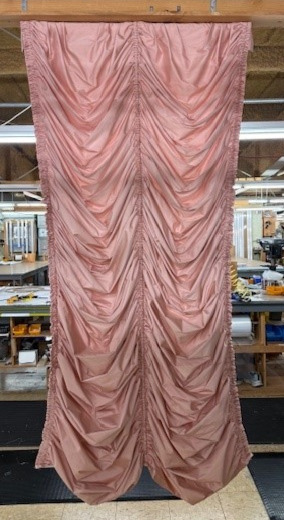
Wider spacing between the tapes can cause the sides of an Austrian shade to pull inward.
This is not necessarily a fabrication error. It is a natural result of the way the wider sections of fabric are being supported. The wider the swag, the more noticeable the inward pull may become.
When you want broader swags but still need the finished shade to maintain straighter sides, the construction must provide additional support.
MYL’s Solution for Wider Swags
MYL can add fabric-covered horizontal ribs to the back of the Austrian shade.
The ribs are positioned at equal intervals and hand-tacked to the vertical tapes, typically at every fourth ring. By connecting the tape rows horizontally, the ribs help distribute support across the full width of the shade rather than allowing each gathered section to pull independently.
This added structure encourages the sides to hang straighter while preserving the wider swag proportions you specified.

Covered ribs are hand-sewn across the back of the shade at evenly spaced intervals.
The completed treatment retains the soft, gathered character of an Austrian shade without the pronounced hourglass shape.
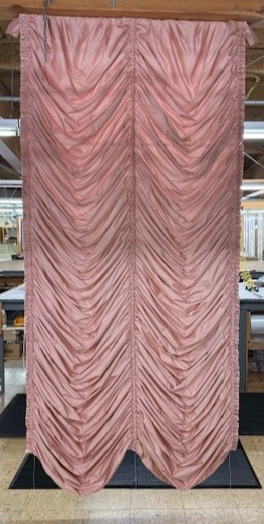
The finished Austrian shade with wider swags and straighter outside edges.
Consider Light, Lining, and Weight
The covered ribs help control the shape, but they introduce another detail to consider during specification.
Depending on the face fabric and the amount of sunlight coming through the window, the horizontal ribs may create visible shadow lines. Blackout lining or double lining can help prevent the ribs from showing through the face fabric.
Additional lining also adds weight. An Austrian shade already contains considerably more fabric than many other shade styles because of its width and vertical fullness. Adding blackout lining, double lining, and supporting ribs can make a large treatment especially heavy.
For that reason, MYL may recommend reducing the vertical fullness from the standard 300% to 250% or less when blackout or double lining is used. The appropriate fullness will depend on the face fabric, treatment dimensions, lining, and overall weight of the finished shade.
Start With MYL’s Standard Specification
MYL’s standard specification of 150% width fullness, 300% vertical fullness, and tape spacing of approximately 10 to 12 inches creates the characteristic fullness of an Austrian shade while helping reduce the tendency for the sides to pull inward.
If you or your client prefer wider swags, the tapes must be spaced farther apart. That wider spacing can create the hourglass effect and may require covered ribs, additional lining, or adjusted vertical fullness.
Get the MYL team involved early in the process. We can help determine the specifications needed to achieve the wider look while keeping the finished shade straight, balanced, and functional.